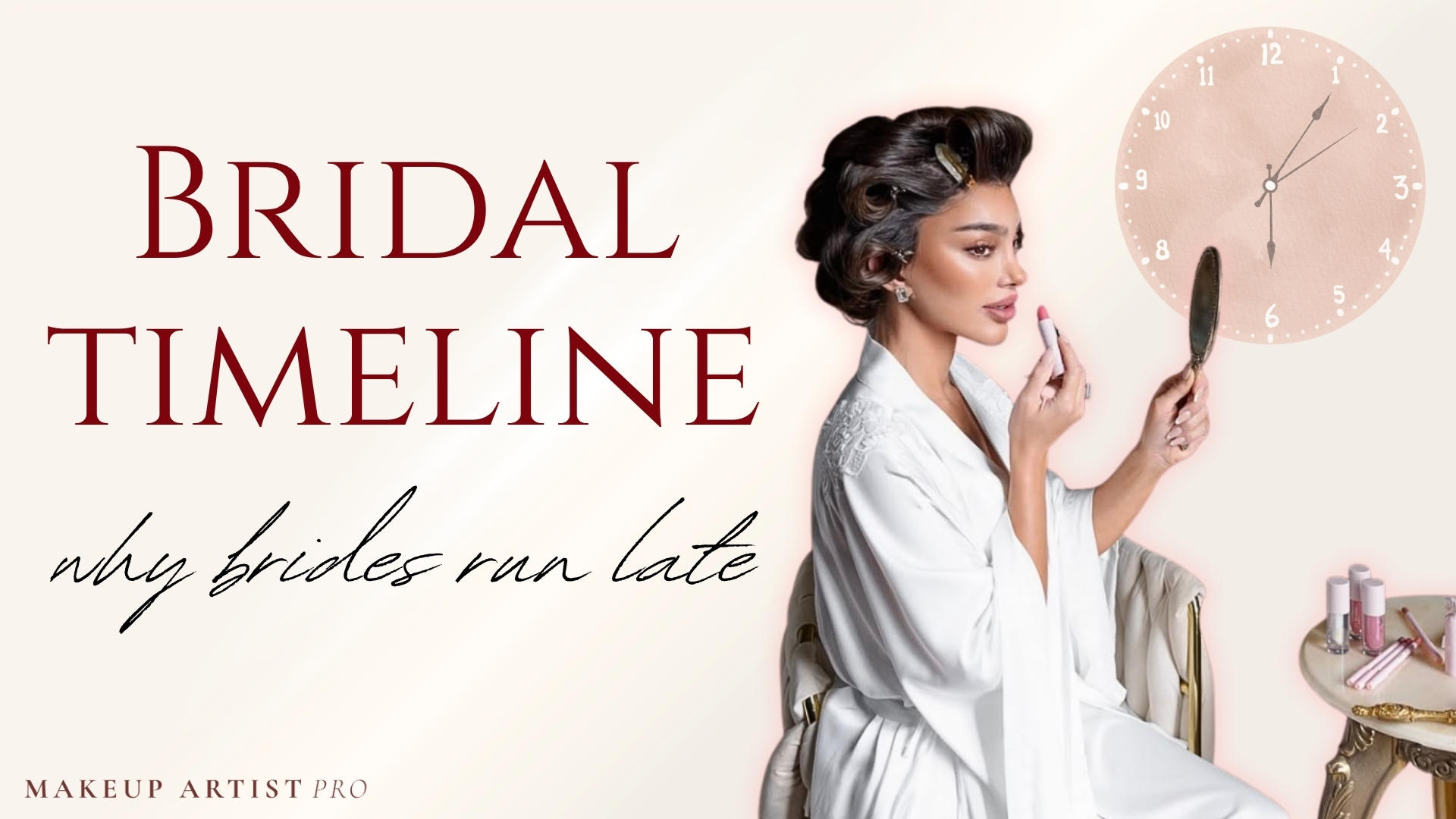
Wedding makeup needs to be done before anyone is waiting on it. The makeup can be flawless, but if it finishes late, the whole morning feels it. The dress moment gets rushed, portraits get cut short, touch-ups disappear, and the stress starts eating into the ceremony.
The fix is to stop planning from "what time should makeup start?" Plan from the other end instead: the moment the bride has to be dressed, photographed, and out of the glam room. Once that time is set, every appointment before it falls into place.
The Golden Rule: Finish Makeup Before You Think You Need To
For most weddings, the bride's makeup should be completely finished 30 to 60 minutes before she needs to get dressed or leave for first look photos. That window is not wasted time. It is the safety margin that lets you put on jewelry, take robe photos, steam the veil, fix a lash corner, blot shine, drink water, breathe, and avoid the energy of being chased.
The actual makeup application usually takes 75 to 90 minutes for the bride and 35 to 50 minutes per bridesmaid, mother, or guest. Hair runs on its own clock, so your final timeline should be built with both artists together. The mistake is treating hair and makeup as one fuzzy block called "getting ready." They are separate production lines that need their own order, buffers, and finish times.
Your wedding makeup should be finished before the room starts moving. The most beautiful bridal face still needs time for final setting, lip touch-ups, dress photos, and tiny corrections that only appear once the veil, earrings, and natural light enter the chat.
If you are still planning the look itself, choose your base finish with the matte vs dewy foundation guide, check color strategy with the foundation oxidation guide, and use the smokey eye tutorial if you want bridal definition without panic-blending at 7 a.m.
Work Backward From the Photography Timeline
The ceremony time is useful, but it is not the true beauty deadline. Your real deadline is the first moment your photographer needs the bride fully camera-ready. That might be a first look, family portraits, wedding party photos, a private vow reading, or the "getting dressed" sequence.
Start with the earliest photo moment that requires finished makeup, then work backward:
- Write down the ceremony time.
- Add the first look or portrait start time, if you have one.
- Decide when the bride must be dressed.
- Subtract 30 to 60 minutes for buffer and final touch-ups.
- That is the latest the bride's makeup should finish.
- Build every makeup appointment backward from that finish time.
For example, if first look photos begin at 1:30 p.m. and the dress needs 45 minutes, the bride should start dressing at 12:45 p.m. Give her a 30 minute buffer before that and bridal makeup has to finish by 12:15 p.m. at the latest, with 12:00 p.m. even better. Now the artist can reverse-engineer the whole morning with real numbers instead of hope.
Skip the mental math. Build your exact morning below. Enter your first-photo time and who needs makeup, and this free generator counts every chair backward from the deadline, then lets you download or print the schedule and add it to your calendar.
Wedding Morning Timeline
Tell us when the first photo is and who is getting glam. We plan the morning backward so the bride finishes calm, on time, and camera-ready.
The cleaner your anchor time, the calmer your morning. If your photographer says, "I arrive at 11:30," ask what they need at 11:30. Detail photos can happen while the bride is in makeup. Bridal portraits cannot.
How Long Wedding Makeup Takes Per Person
These are the timing blocks I use when building a realistic wedding day makeup schedule. They are intentionally conservative because wedding mornings include greetings, questions, lipstick decisions, bathroom breaks, phone calls, breakfast trays, and one person who cannot find her robe.
| Person or Service | Practical Timing | Notes |
|---|---|---|
| Bride makeup | 75-90 minutes | Add 15 minutes for complex eyes, acne coverage, mature skin, or airbrush setup |
| Bridesmaid makeup | 35-50 minutes | Soft glam, lashes, and skin prep usually fit here |
| Mother of bride/groom makeup | 45-60 minutes | Often needs more skin prep, listening, and careful eye detail |
| Junior bridesmaid makeup | 20-30 minutes | Keep it age-appropriate and simple |
| Flower girl polish | 5-10 minutes | Lip balm, blush tap, maybe sparkle if approved |
| Final bridal touch-up | 10-15 minutes | Lip, powder, lash check, veil-proofing, body glow if used |
If an artist says they need different timing, believe them. Their kit, style, speed, and service standard matter. A full matte glam with cut crease, full strip lashes, and body coverage is not the same timeline as soft neutral makeup with individual lashes.
"Bridal party of six" may actually mean bride, four bridesmaids, two mothers, and an aunt. Count every person receiving makeup before you decide start time.
One hairstylist and one makeup artist can work on two people at once. One artist doing both hair and makeup cannot. That changes the entire morning.
Build in at least 10 minutes for every three people. Someone will be late, hungry, emotional, or missing a contact lens. The schedule should survive that.
For product and skin prep decisions that affect how long the application takes, especially foundation finish and wear, see our guides to matte vs dewy foundation, foundation oxidation, and how to find your skin undertone.
Should the Bride Go First, Last, or In the Middle?
This is where wedding advice gets noisy. Some artists like the bride near the end so the makeup is freshest. Some photographers want the bride partly made up when they arrive for "getting ready" images. Some brides want to relax once their face is done. The correct answer depends on the day.
My default: the bride should be close to the end, but not dead last. Second-to-last is often the sweet spot. It keeps the makeup fresh, gives the photographer a few real application shots, and still leaves room for final adjustments after another person is in the chair.
Bride First
Useful for anxious brides who want to relax early, but it can mean more shine, more lip wear, and more touch-up needs before photos.
Bride Second-to-Last
Fresh enough for photos, early enough for fixes, and practical if the photographer wants real makeup moments before the dress goes on.
Bride Last
Fresh in theory, stressful in practice. If anything runs late, the most important face on the schedule absorbs the delay.
There are exceptions. If the bride has very oily skin, an emotional first look, or a long outdoor gap before ceremony, I may schedule her later with a formal touch-up. If the bride has sensitive eyes, complex coverage, or a very precise liner shape, I want her early enough that nobody is rushing me through detail work.
If your ceremony is at 4:00 p.m., your makeup deadline is not 3:45 p.m. Your real deadline is the last calm moment before photos, dressing, transport, and guest arrival start pulling the day forward.
The Wedding Morning Order That Actually Works
The best makeup schedule is not just a list of times. It is a choreography of people, chairs, outlets, lighting, meals, and emotional energy.
Here is the order I like:
- Start with someone punctual and low-maintenance.
- Place mothers early enough that they are dressed for family moments.
- Keep the bride near the end, preferably second-to-last.
- Schedule the person most likely to be late after someone reliable, not before the bride.
- Reserve a final 10 to 15 minutes for the bride after everyone else is basically camera-ready.
The first slot matters more than people think. Do not give it to the bridesmaid who is arriving from another hotel, the mother who needs to greet vendors, or the friend who never answers texts. Give it to the calm person who will be sitting in the chair with clean skin when the artist arrives.
Here are the three slot decisions that decide whether the morning holds, scored by how much schedule risk each one carries.
What it is: A punctual bridesmaid or sibling with simple glam and clean, moisturized skin.
The concern: The first slot sets the rhythm for the whole room.
What pros know: A smooth first face gives the artist momentum and protects every appointment after it.
Bottom line: Start with your most reliable person, not your most complicated one.
What it is: Makeup for mothers, grandmothers, or important family members.
The concern: Mature skin, watery eyes, and preference conversations can take longer than bridesmaid glam.
What pros know: Give mothers enough time and do not wedge them into the final pressure zone.
Bottom line: Schedule 45 to 60 minutes and leave space for a gentle, respectful pace.
What it is: Putting the bride in the final makeup slot of the morning.
The concern: Any delay lands directly on the bride's face, dress time, and portraits.
What pros know: Freshness is valuable, but not if it removes every correction window.
Bottom line: Use last position only if the party is tiny, the timeline is padded, and the artist specifically recommends it.
What to Do Before You Sit in the Makeup Chair
Good timing is not only the artist's job. Every person receiving makeup should arrive ready. That means clean skin, no heavy SPF unless instructed, contacts in, teeth brushed, robe or button-down on, and inspiration discussed before the morning if possible.
The bride should prep even more deliberately:
- Wash your face and apply the skincare your artist requested.
- Avoid experimenting with new masks or exfoliants that morning.
- Wear a robe, pajama top, or button-down that will not disturb makeup.
- Have your lip color, blotting papers, and touch-up powder nearby.
- Keep your veil, earrings, and hair accessories in the room before final touch-ups.
- Eat before lipstick if you can.
- Assign someone else to answer vendor texts.
If you are your own makeup artist, time a full practice run at least twice. Do not estimate. Start the timer at skincare and stop after setting spray, lashes, lips, cleanup, and packing touch-up products. The clock will teach you more than confidence will.
Timing Mistakes That Make Wedding Makeup Run Late
Most late mornings are not caused by one dramatic disaster. They are caused by tiny unpriced moments stacked on top of each other: five minutes to find lashes, seven minutes to wait for someone to wash her face, three minutes for a phone charger, ten minutes because the bride changed lip colors.
"Everyone can decide their makeup look on the wedding morning."
Tap to revealChoice takes time. Ask each person for their preferred intensity before the wedding, especially lashes, liner, and lip color.
"One late person can throw off the whole glam schedule."
Tap to revealIf the chair sits empty, the artist cannot make that time appear later. A posted schedule and a firm timekeeper matter.
"The bride can skip a touch-up window if the makeup is long-wear."
Tap to revealLong-wear makeup still needs a final lip, shine, lash, and veil check before portraits. The touch-up window is part of the look.
The fix is beautifully unglamorous: print the schedule, share it the week before, put one reliable person in charge, and have every face arrive five to ten minutes before their appointment. The artist should not be the only adult protecting the clock.
Build Your Final Wedding Makeup Schedule
Here is the step-by-step formula I give brides:
- Confirm the first photo-ready time with your photographer.
- Decide when the bride must be dressed.
- Set the bridal makeup finish time 30 to 60 minutes before dressing.
- Count every person receiving makeup.
- Assign realistic minutes per person.
- Place the bride near the end, usually second-to-last.
- Add 10 minutes of buffer for every three people.
- Add a final bridal touch-up block.
- Share the schedule with the bridal party, hair team, photographer, and planner.
- Designate a timekeeper who is not the bride.
Or skip the pen and paper entirely: the free wedding makeup timeline generator runs this exact formula for you, then hands you a printable timeline template and a calendar file in one click.
For a deeply practical base companion, bookmark the matte vs dewy foundation guide. If you want definition that still photographs softly, use the smokey eye tutorial. And if shade matching is the stress spiral of the week, the shade matcher can narrow the product chaos before the trial.
The best wedding morning timeline has two finish lines. One is when the makeup is technically done. The second is when the bride is touched up, dressed, calm, and ready to be photographed. Plan for both.
Frequently Asked Questions About Wedding Makeup Timing
Wedding makeup should start early enough for the bride to be finished 30 to 60 minutes before dressing, travel, or first look photos. For a small party, that may be mid-morning; for a larger party with one artist, it can easily be 7:00 or 8:00 a.m.
Bridal makeup usually takes 75 to 90 minutes, including skin prep, complexion, eyes, lashes, lips, and setting. Add extra time for complex glam, significant coverage, mature skin, watery eyes, body makeup, or a second look.
The bride usually should not be first or last. Second-to-last is often ideal because the makeup stays fresh while still leaving a correction window before photos, dressing, and final touch-ups.
Bridesmaid makeup usually takes 35 to 50 minutes per person. A very natural look may be faster, while full glam, strip lashes, mature skin, or indecision about the look can push the timing closer to an hour.
Add at least 30 minutes before the bride needs to dress or leave for photos, plus 10 minutes for every three people receiving services. Larger parties, travel between locations, and first looks deserve even more buffer.
For a 4 p.m. wedding, bridal makeup often needs to finish between 12:00 and 2:00 p.m., depending on first look photos, family portraits, travel, and dress timing. If there is no first look, you may finish later, but the bride should still be fully dressed well before guests arrive.
The Bottom Line: Plan the Morning Like a Pro
Wedding makeup timing is not about making the morning feel rigid. It is about protecting the parts of the day you cannot redo: the dress reveal, the first look, the portraits, the quiet breath before the aisle, and the feeling that you are being cared for instead of hurried.
Build the timeline backward, give every face a realistic block, keep the bride close to the end without making her the final risk, and preserve a true touch-up window. The goal is not just finished makeup. The goal is a finished bride.
A calm timeline is the first layer of beautiful bridal makeup.