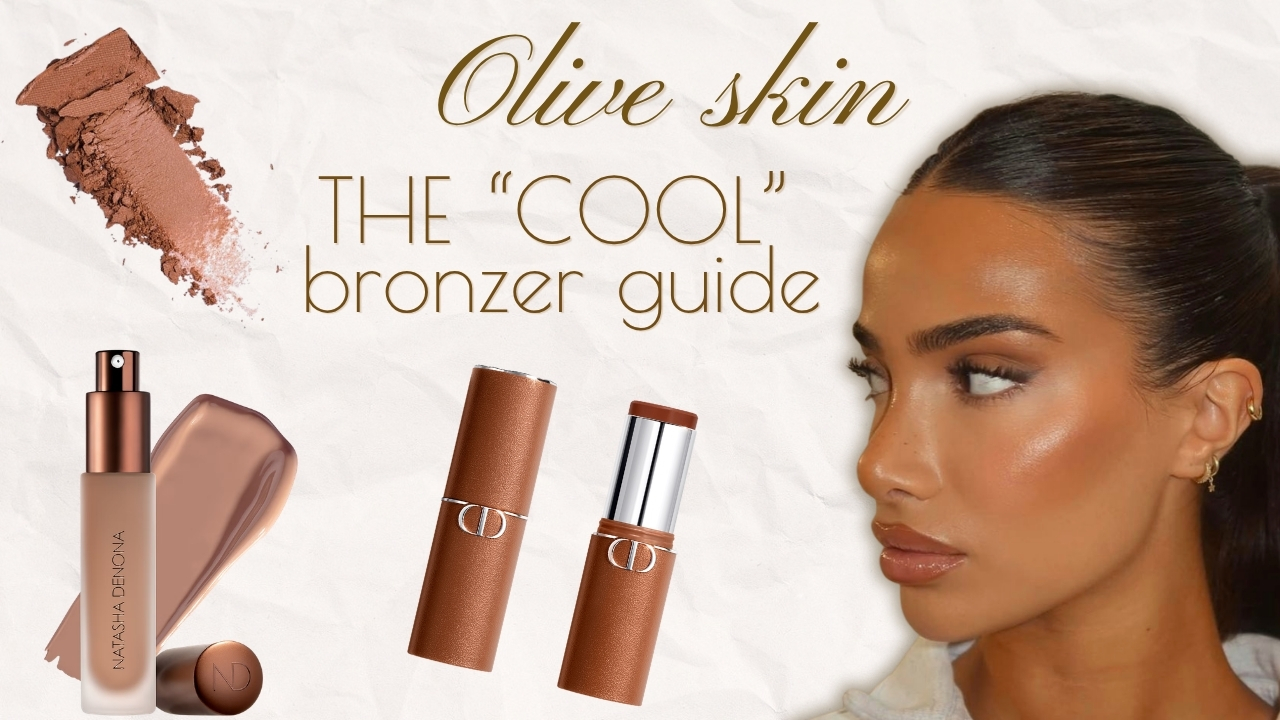
Bronzer should be the simplest product in your routine. Sweep it on, look sun-kissed, done. But if you have olive undertones, you already know it does not work that way. Every bronzer you have tried either turns orange on your skin, looks like a muddy stripe, or somehow makes you look sick instead of sunkissed. You are not imagining it, and you are not applying it wrong. The problem is that almost every bronzer on the market was formulated for warm or cool skin — not olive.
Olive skin has a green-gray undertone that desaturates and shifts warm pigments. When you layer a warm, saturated bronzer on top of that muted base, the result is a visible clash: your skin reads the warm orange tones as foreign, and instead of blending in, the bronzer sits on top like a stripe of color that belongs to someone else's face. This is why bronzer is arguably the hardest product category to get right on olive skin — harder than foundation, harder than blush.
The fix is counterintuitive. You need bronzers that lean cool or neutral, not warm. This guide breaks down exactly why, what to look for, and which specific products actually deliver a believable glow on olive undertones.
Why Most Bronzers Look Orange on Olive Skin
The answer comes down to chroma — the saturation or intensity of a color. Olive skin is inherently low-chroma. The green-gray undertone mutes everything. Most bronzers, however, are formulated with high-chroma warm pigments — think orange-gold, copper, and saturated amber — because those tones read as "sun-kissed" on warm and cool skin types.
When you place a high-chroma warm pigment on low-chroma olive skin, two things happen:
-
The chroma mismatch becomes visible. Your skin's natural mutedness makes the saturated bronzer pigment look more intense by contrast. A bronzer that looks like a soft golden glow on warm skin looks like a neon orange stripe on olive skin.
-
The green undertone clashes with orange. Green and orange are near-complementary on the color wheel. When your skin's green base mixes with the bronzer's orange pigment, it creates a muddy, unnatural result — or worse, amplifies the orange because the green backdrop makes it pop.
This is the same reason saturated coral blush looks jarring on olive skin and why foundations with too much warmth look orange. It is not about depth (how light or dark the bronzer is). It is about the type and intensity of the warm pigment.
The Rule: Cool or Neutral, Not Warm
Olive skin and bronzer have a complicated relationship. Most bronzers are formulated with warm, saturated pigments (orange-gold) that overwhelm olive skin's muted quality. The bronzer looks like an orange stripe instead of a sun-kissed glow.
Choose bronzers that lean cool or neutral — not warm. Olive skin already has a complex color profile, and saturated warmth on top creates clashing tones. A neutral or slightly cool bronzer mimics natural shadow much more convincingly.
It sounds counterintuitive — bronzer is supposed to add warmth — but avoid anything labeled "golden" or "sun-kissed" if it looks orange in the pan. Our complete contouring tutorial covers placement for every face shape, and contour is especially powerful on olive skin because the natural muted quality makes shadow sculpting look effortlessly realistic.
Best Bronzers for Olive Skin
Cool and neutral-toned bronzers that mimic natural shadow instead of adding orange warmth.
Get the original shade — not the warm versions. The buttery formula blends beautifully and reads neutral enough for olive skin. Under $15.
The original neutral matte bronzer. No shimmer, no orange — just believable warmth that works on olive undertones without clashing.
Cream vs Powder Bronzer for Olive Skin
Both formats can work on olive skin, but each has distinct advantages depending on your skin type and the finish you want.
Powder bronzer is the more forgiving format. It is easier to build gradually, harder to over-apply, and blends into the skin with a diffused, natural finish. For olive skin specifically, powder bronzers tend to sit on top of the skin slightly, which can actually be an advantage — the bronzer reads as a soft wash of color rather than melting into the skin and mixing with your green undertone. If you are new to bronzer or tend to go heavy-handed, start with powder.
Cream bronzer melts into the skin for a more realistic, skin-like finish. On olive skin, this can look incredibly natural because the bronzer blends with your actual skin tone rather than sitting on top. The risk is that cream formulas can emphasize the chroma clash more — if the cream bronzer has any orange in it, it will show up faster and more obviously than a powder would because it is mixing directly with your skin's pigment.
Top Cream Bronzers for Olive Skin
If you want the seamless skin-melting finish of cream, these are the cool-leaning formulas that won't go orange on olive undertones.
A 3-in-1 cream bronzer that warms, shapes, and evens skintone in one step. The Light Medium shade is genuinely cool-leaning and disappears into light olive complexions — looks like skin, not makeup. The dewy balm finish lets it blend seamlessly without sitting on top.
A cream-to-powder contour stick with a cool undertone that doubles as a believable cream bronzer on olive skin. Amber sits in the cool-neutral zone — exactly the lean olive skin needs to read as natural shadow instead of orange. Swipe directly on cheekbones, blend with fingers or a sponge, and the matte finish sets without budging.
Officially described by Rare Beauty as "soft tan with cool undertones" — exactly the lean olive skin needs. Bright Side is desaturated enough to almost double as a contour, with whisper-faint green in the pigment that keeps it from ever turning orange. The liquid-like cream stick melts into skin and stays put all day.
Technically marketed as contour, but Biscuit's shadow-mimicking neutral tone is exactly what olive skin needs from a "bronzer" — natural dimension without warmth. One swipe and a quick blend and you're done. The clean formula sits in skin instead of on it, and the magnetic stick is designed to be foolproof on bleary mornings. Splurge-worthy if you reach for cream daily.
How to Apply Bronzer on Olive Skin
Application technique matters more on olive skin than on other skin types. Because olive skin amplifies the appearance of warm products, placement and intensity need to be more precise.
Use a lighter hand than you think you need. Olive skin's low chroma means even a small amount of bronzer has a visible impact. What looks like barely-there product on the brush will often be exactly the right amount on olive skin. Build in thin layers rather than loading the brush up.
Focus on the high points where the sun naturally hits. Sweep bronzer across the tops of the cheekbones, the bridge of the nose, the temples, and lightly across the forehead. Avoid bringing bronzer into the hollows of the cheeks — that is contour territory, and mixing bronzer warmth into olive skin's natural shadow areas creates a muddy result.
Blend outward, not inward. Start at the cheekbone and blend toward the hairline. This keeps the most pigment on the outer face where sun exposure naturally occurs and prevents concentration in the center of the face where it can look heavy.
Set cream bronzer with a translucent powder, not a bronzing powder. Layering bronzing powder over cream bronzer on olive skin doubles the warm pigment and increases the risk of an orange result. If you need to set a cream bronzer, use a finely milled translucent or setting powder instead.
Bronzer by Olive Subtype
Not all olive skin is the same. Your warm-cool lean within the olive spectrum determines which bronzer shades will work best for you.
Tap your undertone to expand
Drugstore Bronzers for Olive Skin
You do not need to spend $30+ to find a bronzer that works on olive skin. Several drugstore options deliver the right undertone and chroma level at a fraction of the price.
Best Drugstore Bronzers for Olive Skin
Affordable bronzers under $20 that skip the orange and deliver natural warmth on olive undertones.
The original shade is the one that works — not the "Sunkissed" or "Deep" variants. Neutral enough for olive skin with a buttery, blendable formula. Consistently rated 4.3+ stars across retailers.
A true matte finish with a neutral-cool undertone. No shimmer, no sparkle, no orange. Blends smoothly and builds without getting patchy. A reliable daily bronzer for olive skin under $10.
A cool-neutral contour stick for lighter olive skin that blends cleanly without turning orange. Swipe sparingly, then soften the edges for an understated sculpt.
Prestige Bronzers Worth the Splurge
If you are willing to spend $40+, a few high-end bronzers stand out for olive skin specifically — formulas where the chroma and undertone have been tuned for sophisticated complexions instead of the lowest-common-denominator warm glow.
Best Prestige Bronzers for Olive Skin
High-end formulas with cool and neutral undertones that work with olive skin instead of fighting it.
A serum-infused liquid bronzer with an ultra-blurred matte finish. The neutral-to-cool shades (Fling, Foxy, Bamboo) are tuned for sophisticated olive complexions — they sculpt and warm without the orange shift.
A talc-free baked powder with a soft-focus, suede-like finish. Builds in thin layers and stays neutral on olive skin instead of pulling warm — ideal if you want a powder that does not look chalky or flat.
A balm stick that melts into skin with a barely-there finish. The pigments adapt to your tone rather than depositing one fixed color, which is exactly what olive skin needs to avoid the muddy clash you get from saturated bronzers.
What to Avoid
A few specific things to watch for when shopping for bronzer with olive undertones:
- Avoid "golden" or "sun-kissed" in the shade name. These labels almost always mean high-chroma warm pigments that will clash with olive skin.
- Avoid heavy shimmer. Shimmer particles catch light and amplify the warm tones in the bronzer, making the orange problem worse. Matte or satin finishes are safer.
- Avoid bronzers with visible orange or copper tones in the pan. If it looks warm in the pan, it will look warmer on olive skin. Look for bronzers that appear slightly taupe, gray-brown, or "boring" in the pan.
- Avoid baking with bronzer. The concentrated application of baking intensifies pigment, and on olive skin this pushes even neutral bronzers into orange territory.
Related Articles
Looking for more olive skin guides? These companion articles cover everything from foundation matching to the best blush and lipstick shades: