Finding blush that works on olive skin is one of the most frustrating parts of building a makeup routine around green-muted undertones. The problem is not that blush does not suit you — it does. The problem is that olive skin is inherently low-chroma, which means it desaturates and mutes everything placed on top of it. When you apply a bright, saturated blush, your skin amplifies that high-chroma pigment by contrast, making it look garish, unnatural, and disconnected from the rest of your face. The shade that looks soft and natural on someone with warm or cool undertones reads like a neon sign on olive skin. The solution is to understand why this happens and choose blushes that work with your skin's natural mutedness rather than against it.
This guide breaks down the best blush shades for every olive subtype — warm, cool, and neutral — with specific product recommendations, swatches, and video reviews across every price point.
Why Bright Blush Looks Wrong on Olive Skin
Bright blush on olive skin looks like a mistake — it reads as unnaturally vivid because your low-chroma skin makes high-chroma pigments pop by contrast. The fix is to reach for dusty, muted, or "dirty" looking blushes that most people skip in the pan because they look unimpressive next to brighter shades.
Olive skin's green-gray undertone is the same property that makes foundation matching so difficult: it desaturates everything placed on top of it. With foundation, that means a shade that looks "right" on the back of your hand can read orange or pink the moment it covers the green base. With blush, the dynamic is even more visible — pigment density is higher, the placement is concentrated on a small area, and the contrast between your low-chroma base and a high-chroma blush is impossible to miss. The lower the chroma of the blush, the better it harmonizes.
The shades that get passed over at the makeup counter — the ones swatchers describe as "boring" or "muted" — are the exact shades olive skin needs. Saturated brights are the trap.
Best Blush Shades by Olive Subtype
The right blush depends on which direction your olive leans. Warm olive, cool olive, and neutral olive each have their own narrow band of flattering shades — and the wrong picks for one subtype can be the perfect picks for another.
Patrick Ta: The Olive-Skin Blush Standard
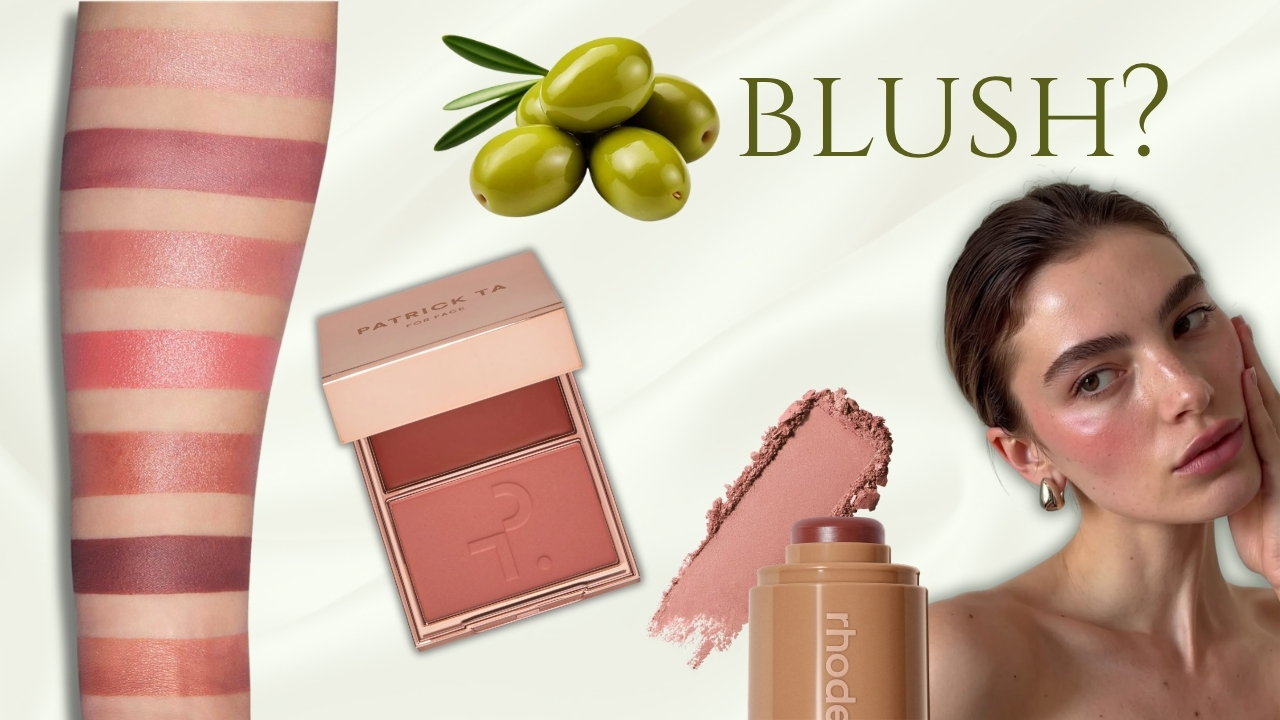
One brand that consistently nails olive-friendly blush is Patrick Ta. His Major Headlines Double-Take Crème & Powder Blush Duos are a standout because they use a cream-over-powder layering technique that builds low-chroma color naturally on olive skin — exactly the approach that works. Key shades for olive skin:
- Not Too Much — a go-to neutral shade for light olive skin. Subtle enough for everyday wear without pulling too warm or too pink.
- She's Seductive — a neutral rosy pink that reads beautifully on olive undertones. This is the shade to grab if you want a pink blush that does not look jarring against green-muted skin.
- She Goes to the Gym — a cool mauve rose that flatters olive skin across light to medium depths. Another safe pick that avoids the orange-coral trap. Also available as a mini duo if you want to try before committing to the full size.
- She Knows Who She Is — a low-saturation berry-terracotta. This one is especially great for medium to deep olive skin — berry shades are usually too bright and high-chroma for olive, but this one keeps the saturation in check so it actually works.
Pro tip: with olive skin, avoid orangey blushes and go for pink-leaning or muted berry tones instead — they complement the green undertone rather than clashing with it. Patrick Ta's Precision Dual-Ended Blush Brush is designed for these duos, with a fluffy side for powder and a dense side for cream.
Olive-Friendly Cream Blushes Beyond Patrick Ta
Beyond Patrick Ta, here are more olive-tested cream blushes worth trying — each one chosen specifically because it stays muted and soft on green-toned skin:
- Haus Labs Color Fuse Glassy Blush Balm Stickin Glassy Ginger — a dusty pink that never pulls orange on olive skin. Lip-and-cheek formula with 8-hour wear.
- Westman Atelier Baby Cheeks Blush Stickin Petal — a cool neutral pink that leaves a subtle red-pink flush. Beautiful on light to medium olive. (mini available)
- Westman Atelier Baby Cheeks Blush Stickin Garçonne — a muted mauve with less red than Petal. Looks similar in the pan but reads warmer and softer once blended.
- Rhode Pocket Blushin Tan Line — soft muted warmth with subtle warm undertones. Can pull very slightly orange on olive skin, but it is minimal.
- Rhode Pocket Blushin Sleepy Girl — a dusty mauve that gives a natural, barely-there pink flush. The safest pick from Rhode for olive undertones.
High-End Blushes for Olive Skin
For an even deeper dive into olive-friendly blushes across every price point, here is a full roundup of shades that work — starting with prestige formulas where pigment science and texture quality are at their peak:
High-End Blushes That Work on Olive Skin
Muted, low-chroma formulas that complement green undertones instead of clashing with them.
Soft, buildable blush with baked minerals that layers without getting heavy. Sheer enough for olive skin's low-chroma needs.
A color-reviving blush that adapts to your skin tone for a natural-looking flush. Reacts with your skin's pH so the result is always olive-friendly.
A soft plum that reads beautifully muted on olive skin thanks to the light-diffusing powder. Also try: Ethereal Glow, Sublime Flush, Luminous Flush.
A nude mauve that gives olive skin a natural "just pinched" look without pulling orange. One of Selena's most olive-friendly shades.
Not Too Much and She's Blushing are both low-chroma shades practically designed for olive undertones. Layer cream over powder for a multidimensional glow.
Drugstore Blushes for Olive Skin
Olive-friendly blush is one of the rare categories where the drugstore actually delivers — because the brands targeting mass-market accessibility tend to formulate softer, more muted shades that play nicely with most undertones, including olive. These are the budget picks worth seeking out.
Budget Blushes That Nail Olive Undertones
Proof that you do not need to spend $40+ to find a blush that works on olive skin.
A subtle, cool mauve pink that punches way above its price point. Available at Walmart and drugstores.
Sheer matte formula with jojoba oil that blends easily on olive skin. A cult favorite for good reason.
A luminous peach blush with a soft golden sheen that brings warmth to olive skin without turning orange. Buildable, easy to blend, and still firmly in drugstore territory.
A glowy liquid wand that adds instant luminosity with a cushion-tip applicator. Available at Target and Ulta.
Creamy putty-to-powder blush infused with argan oil. Also try Bora Bora for a slightly different muted tone.
High-pigment liquid blush that blends to a soft dewy finish. Stays all day without fading — drugstore Rare Beauty energy.
How to Apply Blush on Olive Skin
Getting the right shade is half the battle — application matters just as much on olive skin. The goal is a natural, diffused flush that looks like it is coming from within, not sitting on top.
Use a lighter hand than you think you need
Olive skin amplifies pigment, so start with less product than you would normally reach for. You can always build up, but blending out too much blush on olive skin is harder than it sounds — the pigment tends to grab and hold.
Build in thin layers
This is especially important with cream and liquid formulas. Dot a small amount on the apples of your cheeks and blend outward toward the temples. Wait a few seconds, then assess before adding more. Two thin layers will always look more natural than one heavy one.
Blend with a damp sponge for sheerer coverage
If you accidentally apply too much, press a clean damp beauty sponge over the blush to diffuse it. This also helps cream blushes melt into skin rather than sitting on the surface.
Place blush slightly higher than the apples
On olive skin, blush placed too low on the cheeks can read muddy. Aim for the top of the cheekbone and sweep upward toward the temple for a lifted, fresh effect.
Set cream blush with a matching powder
This is why Patrick Ta's cream-over-powder duos work so well — the powder locks in the cream and extends wear without adding chalkiness. If you are using a standalone cream blush, set it with a light dusting of translucent powder or a complementary powder blush in the same tone family.
Frequently Asked Questions About Blush for Olive Skin
Dusty rose is the most universally flattering shade across all olive subtypes — it has inherently low chroma and sits at the intersection of warm and cool, so it harmonizes with olive's green-gray undertone instead of clashing with it. From there, warm olive leans into soft terracotta and dusty peach, cool olive into muted mauve and berry, and neutral olive into brownish pink and taupe-rose.
Both can work — but only in their dusty, low-chroma versions. A muted pink (think dusty rose or mauve) flatters cool and neutral olive. A muted peach (think soft terracotta, not bright coral) flatters warm olive. The trap is bright pink or vivid peach: those high-chroma versions amplify olive skin's green undertone by contrast and read as cartoonishly vivid.
Only if it is muted, never bright. Bright coral is one of the worst blush shades for olive skin because orange sits opposite green on the color wheel and creates a visible clash. A soft, dusty terracotta (sometimes labeled "warm coral" or "muted coral") works on warm olive — but the moment it tips into neon or fluorescent territory, it reads orange-stripe instead of natural flush.
Yes, but shade selection matters. The brighter, more saturated shades in the line — Joy, Bliss, and Happy — tend to look loud on olive skin. Hope — a nude mauve — is the most olive-friendly pick because it stays muted and gives a "just pinched" flush without pulling orange. The buildable liquid formula also lets you control intensity, which is critical on low-chroma skin.
Pure orange or orange-coral blush is the single hardest tone for olive skin to wear. The green undertone in olive skin amplifies orange pigment by contrast — the result reads stripe-y and unnatural, not sun-kissed. Pink-leaning, mauve, and muted berry tones complement the green undertone instead of clashing with it. If you want warmth, reach for soft terracotta rather than bright orange.
Cream blush tends to look more natural on olive skin because it melts into the skin and reads as a flush from within rather than a layer of pigment sitting on top. Powder can look chalky if applied too heavily on low-chroma skin. The best approach for longevity is to layer cream first, then a tiny amount of powder in the same tone family on top — which is exactly the technique Patrick Ta's Double-Take duos are designed for.
The Bottom Line: Muted Always Wins
Bright blush on olive skin is a self-correcting problem — the moment you stop reaching for what looks "pretty" in the pan and start trusting the dusty, muted, almost-boring shades, your face transforms. Olive skin's low chroma is not a limitation; it is the reason you can wear shades that look muddy or washed-out on everyone else. Pick your subtype, lean dusty, apply with a featherlight hand, and let the shades nobody else can pull off do the work.
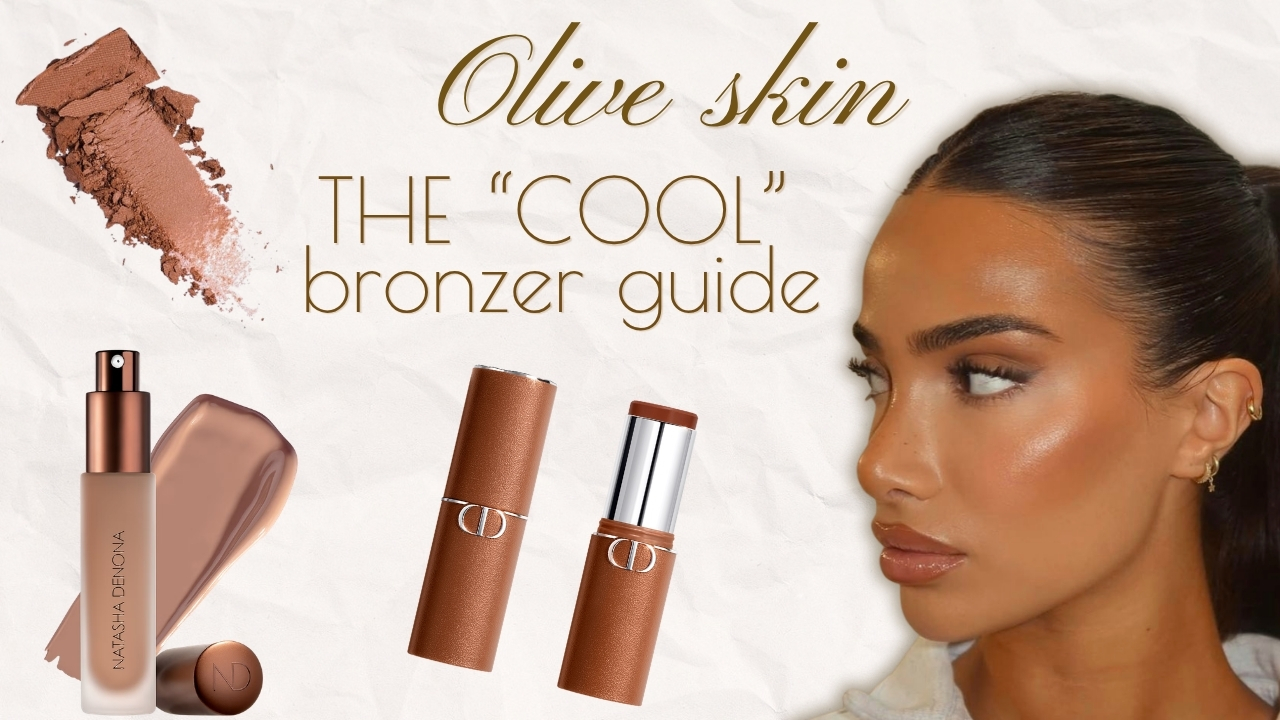
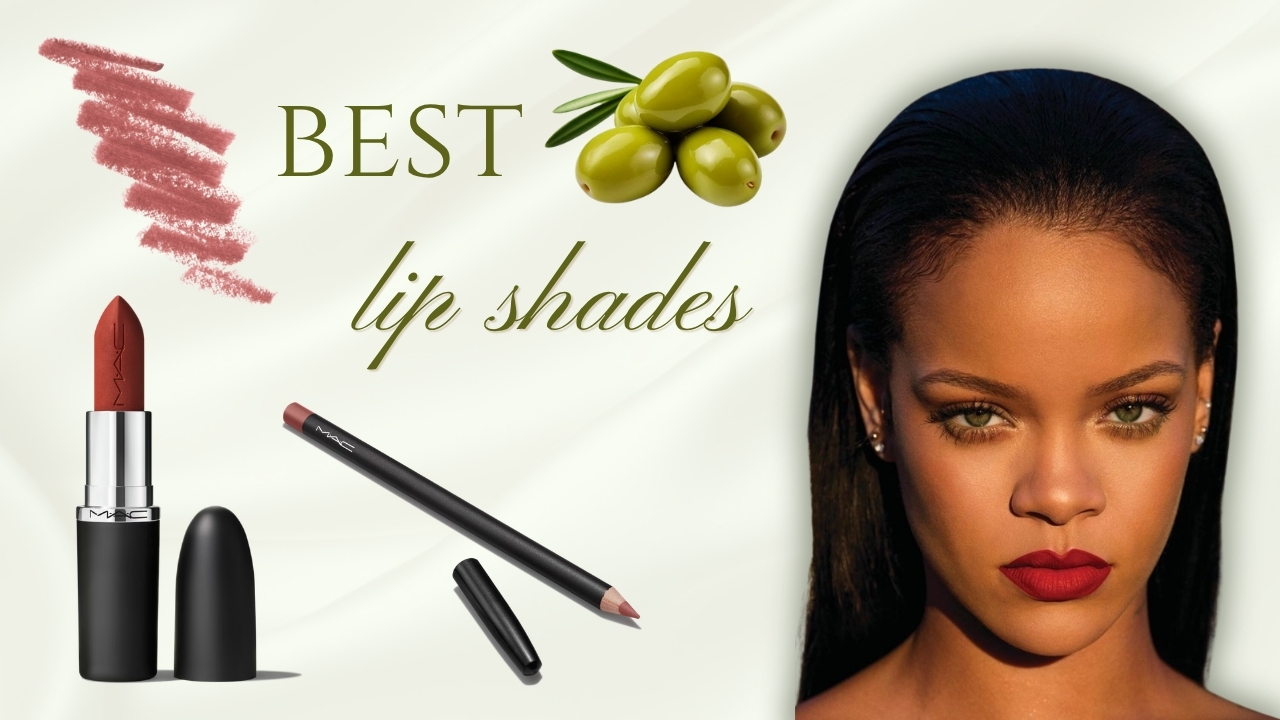
Muted always wins on olive skin. The same rule applies to bronzer and lipstick — go dusty over vivid, cool/neutral over warm.
More in the Olive Skin Series 🫒
This article is part of a complete olive skin makeup guide. Explore the rest of the series:
- Foundation for Olive Skin — the full masterclass on finding your perfect match
- Best Lipstick for Olive Skin — muted nudes, berries, and reds that work
- Best Bronzer for Olive Skin — warm-up without the orange