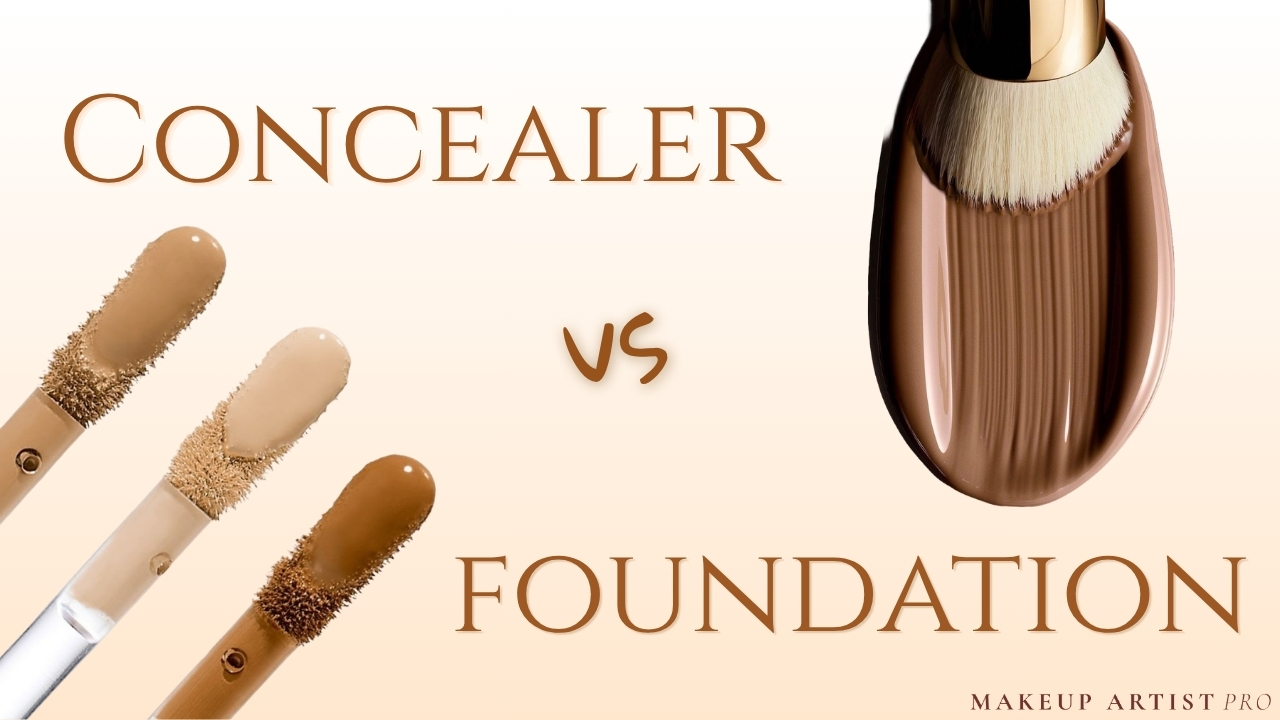
Concealer and foundation are not the same product, they are not interchangeable, and the shade rules for each are completely different. This is the single biggest source of confusion I see in makeup — people buying concealer in their foundation shade, or skipping foundation entirely without understanding why their concealer is creasing and caking. In this guide, I am going to break down every difference between concealer and foundation: what each product actually does, how shade selection works differently for each, which coverage level to choose, when you need both, when you need only one, and the exact step-by-step application order that professional MUAs use on set. By the end, you will understand these two products so well that every base makeup decision becomes automatic.
What Is the Actual Difference Between Concealer and Foundation?
Foundation and concealer are both complexion products, but they serve fundamentally different purposes — and understanding this distinction is the key to using both correctly.
Foundation is a base layer. It evens out your overall skin tone across the entire face — smoothing out minor discoloration, redness, and uneven texture so everything looks uniform. Think of it as the primer coat on a wall. It creates a clean, even canvas. Foundation comes in a range of coverage levels (sheer to full) and is designed to be spread over large areas of skin.
Concealer is a targeted corrector. It is formulated with a higher concentration of pigment than foundation — typically two to three times more — which allows it to cover specific problems that foundation alone cannot hide: dark circles, blemishes, hyperpigmentation, redness around the nose, and acne scars. Think of it as the touch-up paint after the primer coat.
The formulation difference matters. Foundation uses a higher ratio of emollients, water, and film-forming agents to create a thin, spreadable layer across the face. Concealer packs more pigment into a thicker, creamier base so it can mask darker discoloration without needing to be spread across a large area. This is why you cannot simply use foundation as concealer — it does not have enough pigment density to cover a dark circle. And it is why slathering concealer all over your face often looks cakey — it has too much pigment for full-face coverage.
Patrick Ta nails the distinction: foundation creates the base, concealer refines the details. Mario Dedivanovic takes this further — he applies complexion products "in soft layers with a lot of blending in between steps" so he uses "only the amount of product that's needed to keep the skin looking as natural as possible." This layered approach is the professional standard.
Concealer Shade vs Foundation Shade: The Rules Are Different
This is where most people go wrong, and it is the most important section of this article. Concealer and foundation have completely different shade-matching rules — and the rules change depending on WHERE you are applying the concealer. Both products must match your undertone, so if you have not identified yours yet, start with our undertone identification guide.
🎨 Foundation Shade Rule: Exact Match
Your foundation shade should be an exact match to your skin. Period. It should disappear into your jawline seamlessly. If you can see where the foundation starts and stops, the shade is wrong. Foundation is not supposed to brighten, darken, or change your skin — it is supposed to match it perfectly while evening out minor variations.
🎯 Concealer Shade Rules: It Depends on the Purpose
Here is where it gets nuanced, and where understanding the "why" behind each rule will transform your application.
The rule: Choose a concealer one to two shades lighter than your foundation shade for under the eyes.
Why it works: The under-eye area is naturally shadowed by your brow bone and orbital structure. Dark circles add even more depth. A concealer that matches your skin exactly will cover the discoloration but leave the area looking flat and recessed. Going one to two shades lighter counteracts the natural shadow AND brightens the area, creating a lifted, awake appearance — this is the "triangle of light" technique that makeup artists use.
The mistake: Going MORE than two shades lighter creates an obvious white or gray patch under the eyes. This is the classic "reverse raccoon" look. One to two shades is the sweet spot.
For deeper skin tones: Stick to one shade lighter maximum. The contrast between two shades lighter concealer and deep skin can create an ashy, gray cast. One shade lighter with a warm or peach undertone is the ideal approach.
The rule: For blemishes, acne scars, redness, and hyperpigmentation, your concealer should be the SAME shade as your foundation — an exact match.
Why it works: The goal here is camouflage, not brightening. You want the concealer to blend seamlessly into the surrounding skin and foundation so the blemish disappears entirely. A lighter shade will draw attention TO the blemish by creating a highlight where you least want one. An exact match makes the spot invisible.
Application tip: Dab concealer directly onto the blemish with a small brush or your fingertip. Do NOT blend outward — press and pat to fuse the concealer into the surrounding base. Blending outward pulls the product off the blemish and reduces coverage exactly where you need it most.
The rule: When using concealer as a highlighter — on the bridge of the nose, center of the forehead, Cupid's bow, and chin — go two or more shades lighter.
Why it works: This is strategic brightening to create dimension and draw the eye to the high points of the face. It works on the same principle as contouring: lighter shades advance (project forward) and darker shades recede (create shadow). You are using concealer as a sculpting tool, not as a corrector.
Important: This technique uses concealer for a different purpose entirely. It is not correcting an imperfection — it is creating dimension. Our highlighting guide covers this technique alongside powder and cream highlighters. Many people own two concealer shades for exactly this reason: one that matches their foundation for blemishes, and one that is lighter for brightening and highlighting.
As Wayne Goss puts it: "Make-up isn't meant to be seen, and is meant to be subtle." He emphasizes using "the right colour concealer to match your skin tone; nothing too dark, and nothing too light." Nikkie de Jager takes this principle and runs it through her full-glam approach — she uses two concealer shades in every routine: one shade lighter than her skin for dark circles, and a skin-matching shade for all other blemishes. Having two concealer shades is the simplest upgrade you can make to your base routine.
Watch how professional MUAs demonstrate shade matching for concealer vs foundation:
Color Correcting: The Step Before Concealer
If your dark circles or redness are severe, concealer alone may not be enough — you need a color corrector underneath. Color correctors use complementary colors on the color wheel to neutralize discoloration before you apply concealer over the top. (If you are not familiar with how the color wheel works in makeup, our complete undertone guide breaks it down with a visual color wheel and practical examples.)
Dark Circles
Warmth cancels the blue-purple under the eyes. Match saturation to depth — peach for fair, orange for medium, red for deep. Apply before concealer.
Redness
Spot-apply on acne, rosacea, or broken capillaries — green sits opposite red on the color wheel. Don't spread across large areas or skin reads gray. Layer concealer on top.
Sallowness
Brightens yellow, dull tones. Best as a light wash over the full face — over-applied, it reads lavender-gray.
Two concealers that actually deliver on this: the Sephora Collection Best Skin Ever Natural Concealer is the best-value option at this counter, a lightweight buildable formula with a skin-like finish that layers cleanly over color corrector without caking. For a more hydrating, treatment-forward option, the Haus Labs Triclone Skin Tech Concealer is formulated with niacinamide and fermented arnica to calm redness and inflammation while providing buildable coverage — it has over 1,000 five-star reviews on Sephora.
The L.A. Girl HD Pro Concealerin Orange Corrector is the best value color corrector on the market — under $6 and it genuinely neutralizes dark circles on medium to deep skin tones. For fair skin, try the SEPHORA COLLECTION Best Skin Ever 8HR Color Correctorin 01 Green to neutralize redness before applying your regular concealer.
Foundation Coverage Types: Which Level Do You Actually Need?
Not all foundations are created equal, and choosing the wrong coverage level is just as problematic as choosing the wrong shade. Here is what each level actually means — and when to choose it.
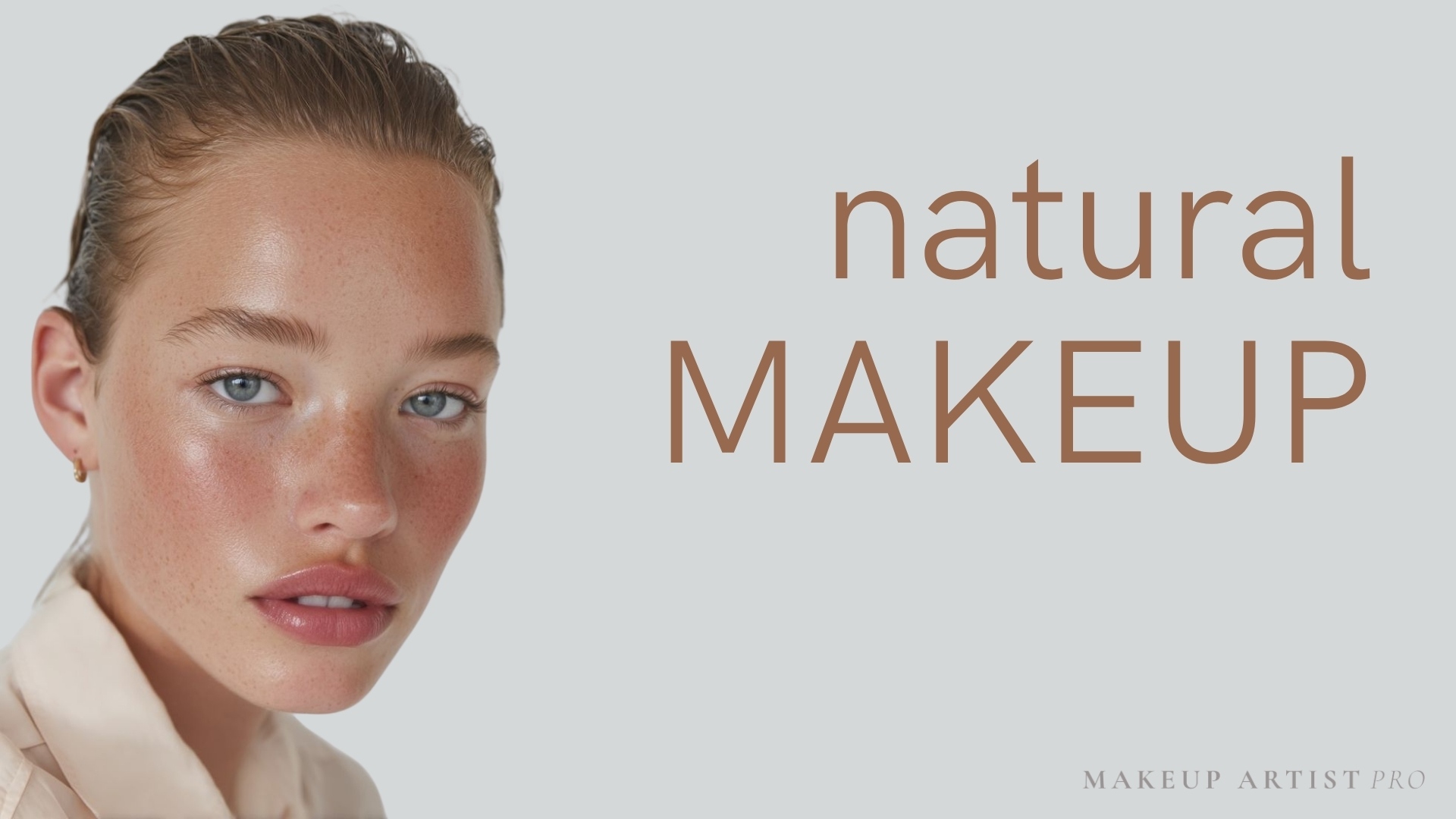
Barely-there coverage that evens out skin tone without masking freckles or texture. Feels like moisturizer with a hint of color. Best for: clear skin that just needs minor evening, "no-makeup makeup" days, and anyone who hates feeling product on their face. Products in this category include tinted moisturizers, skin tints, and BB creams.
Evens skin tone and reduces the appearance of minor redness and discoloration while still letting your natural skin show through. Freckles remain visible. Best for: everyday wear, people who want to look polished without looking "done," and mature skin that benefits from a lighter touch. Many modern serum foundations fall into this category.
Covers most discoloration, evens skin tone completely, and reduces the appearance of blemishes and dark spots. Some texture still visible up close. Best for: most people on most days. This is the "Goldilocks" coverage — enough to create a polished look without looking heavy. Most popular liquid foundations sit here. Buildable to full coverage with a second layer.
Masks virtually everything — acne, scars, dark spots, hyperpigmentation, tattoos, birthmarks. Creates a uniform, flawless finish. Best for: special occasions, photography, video, stage and bridal makeup, and skin with significant discoloration. Can look heavy in person if not blended meticulously. Use sparingly and build where needed rather than applying a thick layer everywhere.
The pro approach: Most professional MUAs use a medium-coverage foundation across the full face, then layer full-coverage concealer only where additional correction is needed. This gives the best of both worlds — an even, natural-looking base with targeted high coverage where it matters. You do not need full-coverage foundation if you have a good concealer. The finish also matters — matte, dewy, and satin foundations all behave differently with concealer layered on top. Our foundation finishes guide breaks down which finish works best for each skin type.
When to Use Concealer, Foundation, or Both
This is the decision framework that will save you time, product, and frustration every morning.
When to use it: Your skin tone is relatively even but you have dark circles, a few blemishes, or redness around the nose. You want a natural, skin-like finish that lets your real skin show through.
How to do it: Apply concealer only where you need it — under eyes, on blemishes, around the nose. Blend the edges so it melts into bare skin. Set with a light dusting of translucent powder. This is the "concealer-only" trend that has taken over TikTok, and it works beautifully when your skin does not need full-face coverage.
Best products for this: A medium-coverage liquid concealer with a skin-like finish — avoid full-coverage matte concealers that will look obvious against bare skin.
When to use it: Your skin tone is uneven across the face (redness, discoloration, blotchiness) but you do not have severe dark circles or prominent blemishes. You want a uniform, even canvas.
How to do it: Apply a medium-coverage foundation across the full face. If it covers everything, you are done — no concealer needed. This is ideal for people whose main concern is evening out skin tone rather than hiding specific spots.
Best products for this: A buildable medium-coverage liquid foundation that you can layer in areas that need extra coverage without adding concealer as a separate step.
When to use it: You have uneven skin tone AND specific problem areas that foundation alone cannot hide — dark circles, active acne, post-inflammatory hyperpigmentation, rosacea patches. This is the most common approach for everyday makeup and professional work.
How to do it: Apply foundation first to create an even base, then layer concealer only where additional coverage is needed. This is more effective and more natural-looking than trying to get everything done with a single product.
Why foundation first: Foundation alone may cover 70-80% of your concerns. By applying it first, you see what still needs coverage — and you use less concealer as a result. Less product = more natural finish.
Watch the concealer-only trend in action — these creators show you how to skip foundation beautifully:
Step-by-Step: How to Apply Concealer and Foundation Together
This is the exact application order that professional MUAs use. Follow these steps and your base will look seamless every time.
Step 1: Prep your skin. Cleanse, moisturize, and apply SPF. Wait two to three minutes for everything to absorb. Apply a primer suited to your skin type — mattifying for oily skin, hydrating for dry skin, pore-filling for textured skin. This is the foundation of your foundation (pun intended), and skipping it is the number one reason makeup does not last.
A milky toner before primer has become the quiet hero of pro skin prep — it plumps and hydrates so foundation and concealer melt into skin instead of sitting on top. Our anti-aging makeup guide breaks down the best ones and how to use them as foundation mixers.
Step 2: Apply foundation. Using a damp beauty sponge, foundation brush, or your fingers, apply your foundation starting from the center of the face and blending outward. Focus coverage where you need it — you do not need to apply the same amount everywhere. The Real Techniques Expert Face Brush is an excellent tool for buffing liquid foundation into a seamless finish.
Step 3: Let the foundation set for 60 seconds. This is the step most people skip. Letting foundation set for a minute before applying concealer prevents the two products from mixing and muddying. It also lets you see what the foundation actually covers once dry — you may need less concealer than you think.
Step 4: Apply under-eye concealer. Using a concealer one to two shades lighter than your foundation, apply in an inverted triangle shape under each eye — this is the "triangle of light" technique. Start at the inner corner, sweep along the lower lash line, then bring the triangle down to the top of the cheekbone. Blend with a damp sponge or your ring finger (the weakest finger, which applies the lightest pressure). The NARS Radiant Creamy Concealer is the gold standard for under-eye brightening — creamy, buildable, and never cakey.
Step 5: Spot conceal. Using a concealer that matches your foundation shade exactly, dab product directly onto any blemishes, redness, or dark spots that the foundation did not cover. Use a small concealer brush or your fingertip. Press and pat — do not blend outward. You want to fuse the concealer into the surrounding base without dragging it off the blemish. For bulletproof spot concealing, the Tarte Shape Tape Concealer delivers full coverage that does not budge.
Step 6: Set. Apply a light dusting of translucent setting powder to the under-eye area and anywhere you applied concealer. For the under-eye, press the powder gently with a small fluffy brush — do not sweep, as sweeping moves concealer around. For blemish concealer, press powder directly onto each spot. The rest of the face can be set with setting spray or left without powder for a dewier finish.
The Exception: Underpainting (Concealer Before Foundation)
There is one major exception to the "foundation first" rule, and it is a technique that celebrity MUA Mary Phillips (who works with JLo and Hailey Bieber) made famous: underpainting. In this method, you apply concealer, contour, and highlight BEFORE foundation, then layer a light, sheer foundation over the top. The result is an ultra-seamless, diffused finish where sculpting and correction look like your actual skin rather than visible makeup.
Mary Phillips explains: "I always like to say that underpainting is the bones of the face, and foundation is the skin that goes on top. Because of that, the foundation has to be lightweight enough to let everything underneath show through." Underpainting works best with cream products and sheer-to-light coverage foundation — our complete contouring tutorial covers placement for every face shape if you want to master the sculpting step. It is a more advanced technique — if you are a beginner, master the traditional method first. But once you are comfortable with placement and blending, underpainting creates the most natural-looking base of any technique I have seen.
The Best Concealers and Foundations for Every Budget
You do not need to spend a fortune to get a great base. Here are the products I recommend across every price point, organized by purpose.
Best Under-Eye Concealers
For under-eye brightening, you need a concealer that is creamy, hydrating, and does not settle into fine lines.
A skincare-first concealer with caffeine, hyaluronic acid, and peptides that brightens dark circles while improving bare skin over time. Medium coverage, radiant finish.
The concealer other concealers are measured against. Medium-to-full coverage with light-diffusing technology that brightens without looking cakey. Over 9,000 five-star Sephora reviews.
Best value under-eye concealer on the market. The sponge applicator makes application effortless, and the haloxyl-infused formula erases dark circles without creasing.
Best Blemish Concealers
For spot concealing, you need higher coverage and a matte finish that stays put.
Oil-free, full-coverage pot concealer with a soft-matte finish. Light-diffusing spheres blur imperfections while peptides and hyaluronic acid treat skin underneath.
The full-coverage workhorse — one dab covers anything and it stays locked in for 16 hours. Matte finish that does not budge on oily or combination skin.
Near-identical full coverage to Shape Tape for under $7. Matte finish that controls oil on blemish-prone skin all day.
Best Everyday Foundations
For your base layer, the right foundation finish makes all the difference.
Medium, buildable coverage with a real-skin finish, formulated with fermented arnica and 20+ skincare actives. Looks like skin, treats skin while you wear it.
The pro standard for a real-skin glow — sheer-to-medium coverage with a luminous, blurring finish that wears 24 hours and never looks like makeup. The most red-carpet-tested foundation in the industry.
Lightweight, buildable medium coverage that lasts up to 32 hours without oxidizing — under $20 and consistently the drugstore foundation pros pull from their kits.
Common Concealer vs Foundation Mistakes (and How to Fix Them)
These are the mistakes I correct most often. If your base makeup is not working, the answer is almost certainly one of these.
"You should use the same shade concealer for under-eyes and blemishes."
Tap to revealUnder-eye concealer should be 1-2 shades lighter for brightening. Blemish concealer should be an exact match to your foundation for camouflage. Two different purposes require two different shades. Many pros carry two concealer shades for exactly this reason.
"You can use concealer instead of foundation for the same result."
Tap to revealConcealer has 2-3x more pigment than foundation. Spreading it across the full face creates a thick, cakey, mask-like finish. Foundation is formulated to be spread thinly over large areas. Concealer is formulated for targeted, small-area application. Use the right tool for the right job.
"Applying concealer before foundation gives better coverage."
Tap to revealFor beginners, applying concealer before foundation means the foundation application disrupts and moves the concealer, reducing its effectiveness. Foundation first lets you see what still needs coverage, so you use less concealer overall. The exception is the underpainting technique — but that is an advanced method with a specific sheer-foundation layering approach.
"Setting under-eye concealer with powder causes more creasing."
Tap to revealNot setting under-eye concealer is the number one cause of creasing. Cream products migrate into fine lines within hours without powder. The key is using a SMALL amount of finely milled translucent powder — pressed gently, not swept — and not over-applying. Too much powder causes dryness, but no powder causes creasing.
More Mistakes to Avoid
Using too much under-eye concealer. Wayne Goss warns that over-applying under-eye concealer "can add 10 years to your face" — thick layers crease, cake, and settle into fine lines within hours. Robert Welsh echoes this, recommending that you buff concealer with a brush and then tap with a warm finger to help it "melt into the skin and look more skin-like." A thin, even layer is all you need. Less is genuinely more.
Not color correcting before concealing severe dark circles. If your dark circles are deep purple or brown, a single layer of concealer will not fully cover them — the darkness will show through. Apply a color corrector first (peach for fair skin, orange for medium-deep skin), let it set, then apply concealer on top. Two thin layers always look better than one thick one.
Choosing concealer based on your bare skin, not your foundation. Your concealer shade should be chosen in relation to your foundation, not your bare skin. If you tan in summer and switch to a darker foundation, your concealer needs to shift too. Always swatch concealer on top of your foundation, not on bare skin.
Blending blemish concealer outward. When you blend outward from a blemish, you pull the product off the spot — thinning coverage exactly where you need it most. Instead, pat and press straight down onto the blemish to fuse the concealer into the surrounding base. Let the edges soften naturally.
How to Make Your Base Last All Day
Even the best concealer and foundation will not last without proper setting. Here is the longevity framework.
1️⃣ Primer is non-negotiable. Primer creates a barrier between your skincare and your makeup, preventing oils and moisture from breaking down your base — without it, foundation can oxidize and turn orange within hours. Use a mattifying primer on your T-zone if you are oily, and a hydrating primer on dry areas. The two-primer approach is the pro move.
2️⃣ Let concealer marinate. After applying concealer, wait about 60 seconds before blending — this allows the product to warm up and adhere to your skin for significantly better staying power.
3️⃣ Set in layers. After concealer, set with a light dusting of translucent powder — just enough to remove tackiness. After your full makeup is complete, finish with setting spray. The spray "melts" powder and liquid products together for a seamless finish. This two-step set (powder then spray) creates a locked-in finish that lasts eight to twelve hours.
4️⃣ Baking: when to use it and when to skip it. Baking — applying a thick layer of translucent powder under the eyes and letting it sit for five to ten minutes before brushing off the excess — creates an ultra-smooth, creaseless finish that is perfect for photography and events. For everyday wear, a light press of powder is all you need. Over-baking makes the under-eye area look dry and textured in natural light.
5️⃣ Touch up with blotting papers, not more product. When your base starts breaking down mid-day, blot excess oil with a blotting paper before adding anything else. Pressing powder on top of oil creates a thick, cakey layer. Blot first, then press a tiny amount of powder only where needed.
Test Your Concealer vs Foundation IQ
Test Your Concealer vs Foundation IQ
5 questions. How well do you really know this stuff?
Frequently Asked Questions About Concealer vs Foundation
Foundation first, then concealer. Foundation covers 70-80% of imperfections on its own, so applying it first lets you see what still needs concealing — meaning you use less product overall. The exception is the underpainting technique, where concealer and contour go under a sheer foundation for a seamless, diffused finish.
It depends on where you are applying it. Under-eye concealer should be 1-2 shades lighter than foundation for a brightening effect. Blemish concealer should be the exact same shade as your foundation for seamless camouflage. Highlighting concealer can be 2+ shades lighter for sculpting.
Absolutely. If your skin is relatively even and you only need coverage in specific areas — under eyes, around the nose, on a few blemishes — concealer alone works beautifully. Use a medium-coverage liquid concealer, blend the edges into bare skin, and set lightly with powder. This is the "concealer-only" approach that many MUAs and influencers advocate for a natural, skin-like finish.
Four common causes: too much product (use a thin layer), not moisturizing the under-eye area first (dry skin grabs and emphasizes texture), not setting with powder (unsettled concealer migrates into fine lines), or using too much setting powder (over-powdering dries out the area). Moisturize, apply a thin layer, set with minimal powder, and press — do not sweep.
The triangle of light is an under-eye concealer technique where you apply concealer in an inverted triangle shape — starting at the inner corner of the eye, sweeping along the lower lash line, and bringing the point down to the top of the cheekbone. This brightens the entire under-eye area and creates a lifted, youthful appearance rather than just covering dark circles in a thin line.
Not always. If your dark circles are mild, a good under-eye concealer one to two shades lighter is sufficient. But if your circles are deep purple, blue, or brown and show through concealer, a color corrector underneath will neutralize the discoloration first — peach for fair skin, orange for medium-deep skin, red-orange for deep skin. Two thin layers always outperform one thick one.
The Bottom Line: Right Product, Right Place, Right Shade
Concealer and foundation are partners, not substitutes. Foundation evens the canvas. Concealer targets the details. The shade rules are different because the purposes are different — and once you internalize that distinction, you will never shade-match wrong again. Use foundation in your exact skin shade to create a uniform base. Use concealer one to two shades lighter under the eyes to brighten, and in your exact foundation shade on blemishes to camouflage. Set everything with a light hand. And remember: the best base makeup is the base you cannot see.
Match the product to the problem. Match the shade to the purpose. That is the entire system — and now you own it.
Already know a foundation shade that works for you? Our Shade Matcher finds the closest matches across every brand — so you can build a concealer and foundation shortlist filtered by product type, shade depth, and undertone.