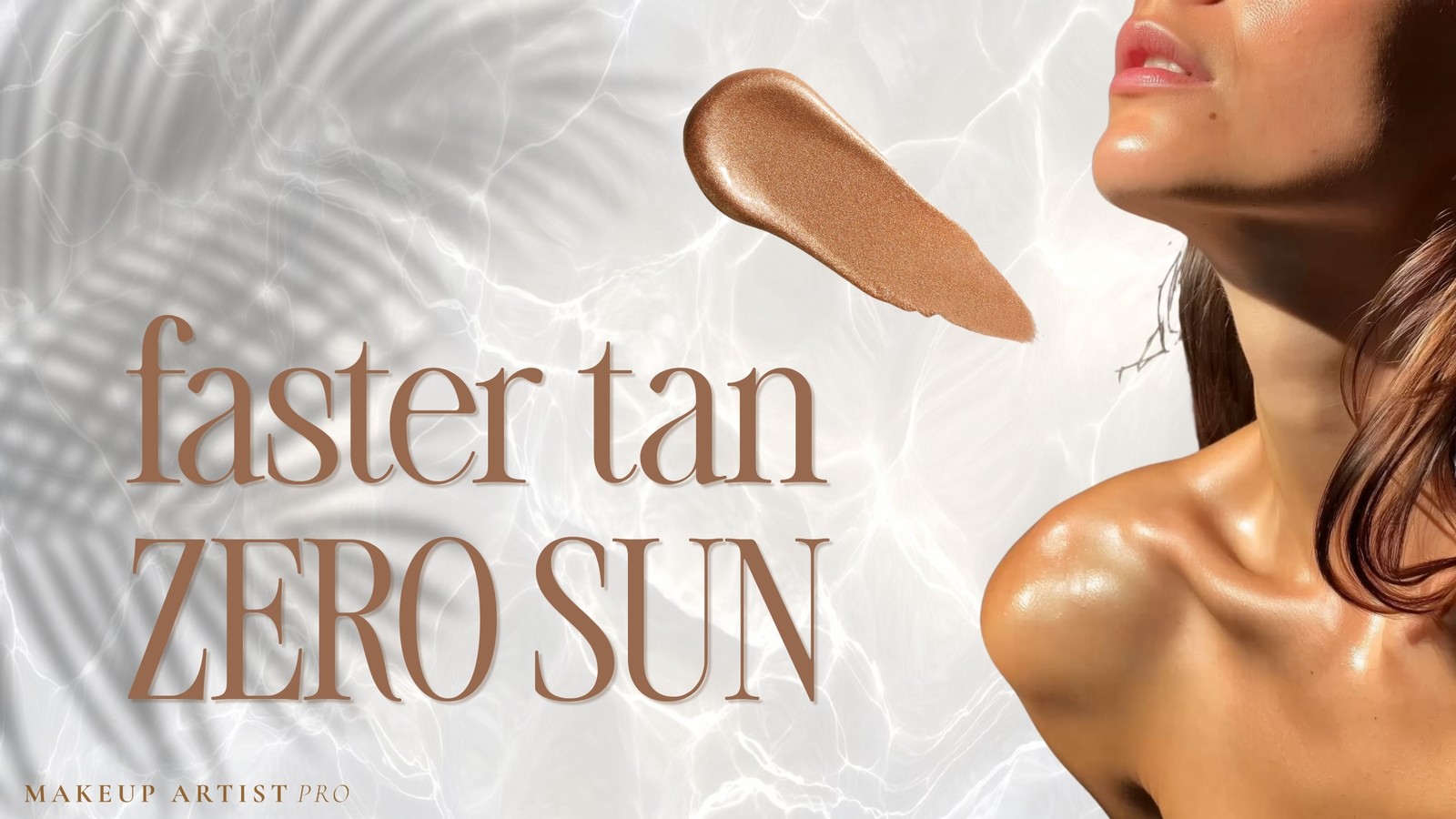
Most tan accelerators cannot deliver the fast, even color their labels promise—and no product makes UV tanning safe. The quickest way to achieve a deep, natural-looking tan without the burn is a DHA-based self-tanner, but the formula and prep make the difference between a believable glow and a streaky result. Here is what actually works, what to skip, and why.
Here is the short version. Most products sold as "tan accelerators" promise to boost your skin's melanin so you tan faster in the sun or on a sunbed. The evidence that they work is thin, the safety picture around UV tanning has changed a lot, and the genuinely reliable way to get faster, deeper color in 2026 has nothing to do with baking in the sun at all.
What Is a Tan Accelerator, Really?
The phrase "tan accelerator" gets stuck on three very different things, and the confusion is exactly why people buy the wrong product. Before you spend a penny, it helps to know which one you are actually looking at.
When people type "tan accelerator" into Google, most are picturing that first card: a cream you rub on before sitting in the sun. That is the traditional meaning, and it is the one that deserves the most scrutiny, because the promise it makes is the one science supports the least.
If a "tan accelerator" tells you to apply it and then go into the sun or a sunbed, it is a UV product, not a skincare glow. The color it gives you is a UV tan, with all the risk that carries.
Do Tan Accelerators Actually Work?
This is the heart of it. The classic pitch is that ingredients like L-tyrosine feed your skin the building blocks of melanin so you tan quicker and darker. It sounds logical. The problem is that topical tyrosine has never been shown to meaningfully increase a tan in controlled research, and the pigment-boosting pills that make the boldest claims are the ones regulators warn against most strongly.
"A tyrosine lotion makes your skin produce more melanin so you tan faster."
Tap to revealTopical tyrosine has not been shown to increase melanin production in the skin. The American Cancer Society notes tanning accelerators have not been proven to work.
"Tanning pills give you a safe, natural-looking golden color."
Tap to revealThe FDA treats tanning pills as unapproved. Canthaxanthin, a common ingredient, can deposit as crystals in the eye and turn skin an orange hue.
"A DHA self-tanner gives real color with no UV exposure at all."
Tap to revealDHA reacts with the outermost dead skin cells to create color. Dermatology bodies consider it safe for external use, and it needs zero sun.
Watch a dermatologist walk through the real science of tanning and the products that promise to speed it up:
To be fair, a UV accelerator that contains a proper SPF is not useless. The sunscreen in it can help protect your skin. But that is the sunscreen doing the work, not a magic tanning ingredient. If you take one thing from this section, let it be this: no cream lets you tan "safely faster" in UV. The speed comes from more sun, and more sun is the part that harms your skin.
The Truth About Tanning in the Sun
This part needs a careful look because so much old advice is still floating around. A lot of people believe a gradual sun tan is harmless, or even healthy, or that a "base tan" protects them on holiday. The current dermatology consensus is blunt, and it is worth hearing clearly.
A tan is your skin reacting to DNA damage from ultraviolet light. That is true whether the light comes from the sun or a sunbed, and whether you burn or not.
"A base tan protects you from sunburn on holiday."
Tap to revealA base tan gives roughly the protection of SPF 3 to 4. Dermatologists recommend at least SPF 30, so a base tan is close to no protection at all.
"Sunbeds are a controlled, safer way to build a tan."
Tap to revealSunbeds are classed as a Group 1 carcinogen. Using them before age 35 is linked to a large rise in melanoma risk, and they emit far more UVA than midday sun.
None of this means you have to be pale if you do not want to be. It means the color should not come from UV. That single shift, from "tan faster in the sun" to "build color without the sun," is the whole point of a modern tan accelerator strategy. If you want a faster, deeper glow, the sunless route below is where it lives.
What to Avoid: Tanning Injections and Nasal Sprays
There is one category to avoid entirely because it has surged on social media and it is genuinely dangerous. Tanning injections and nasal tanning sprays usually contain Melanotan 2, a synthetic hormone that triggers pigment. In 2025, UK Trading Standards warned that nasal tanning sprays are linked to serious respiratory problems and carry a possible link to melanoma.
"Tanning injections"
Melanotan injections are illegal to sell in the UK and are not approved for human use. Products may contain unlabelled contaminants.
"Nasal tanning sprays"
Sprays sit in a regulatory gap and are not covered by cosmetics rules. Official advice is to avoid any tanning product you inhale or swallow.
"Topical DHA self-tan"
DHA self-tanners are regulated cosmetics assessed as safe for external use. This is the category to actually reach for.
The only tanning products with a clean safety and regulatory record are the ones you apply to the surface of your skin and rinse off your hands afterward.
To see how the safety picture stacks up ingredient by ingredient, here is a quick side by side. Tap any bar to expand the detail.
What it is: Dihydroxyacetone, a sugar that reacts with amino acids in the top layer of dead skin to create a temporary brown color.
The concern: Whether it is absorbed or harmful to breathe in during spray tans.
What science says: The reaction stays in the outermost dead cells. Safety reviews have found DHA is not a health risk for external use, though you should avoid inhaling mists.
Bottom line: The safest way to get real color. Keep it out of eyes, nose and mouth.
What it is: A topical amino acid marketed as fuel for melanin so you tan faster in UV.
The concern: Whether it does anything at all, and that it encourages more sun exposure.
What science says: Topical tyrosine has not been shown to boost tanning in controlled research. Any color still comes from UV damage.
Bottom line: Unproven, and it nudges you toward the real risk, which is the sun itself.
What it is: A synthetic hormone injected or sprayed to force pigment production.
The concern: Illegal sale, no quality control, and documented health risks.
What science says: Regulators cite nausea, respiratory problems and a possible melanoma link. It is unapproved for human use.
Bottom line: Do not use it. This is the one non-negotiable in this whole guide.
The Sunless Way to a Faster, Deeper Glow
The good news: if your goal is deeper color sooner, the modern answer is a DHA-based sunless product. The formats have gotten so good that a believable glow is now a two-minute job, and unlike a UV tan, you control exactly how dark you go. These are the real "accelerators" of 2026.
Mix a few drops into your moisturizer. More drops means deeper color, so you dial in the exact depth over a night or two.
A daily moisturizer with a low dose of DHA builds a soft, natural glow over a week, with almost no way to streak.
A clear, weightless water that dries fast and never feels sticky. Great for a light, even body glow with no transfer.
A tinted foam with a guide color you can see as you apply. This is how you get the darkest, most even result fastest.
See how a custom glow comes together with tan drops mixed straight into moisturizer:
Match the format to your patience level. If you want the deepest color in one evening, use a mousse. If you want something foolproof you cannot mess up, use a gradual cream. If you want total control over how dark you get, use drops. Every product below cleared a simple bar before it earned a spot here: at least a 4.0 star rating from real buyers, with no pattern of skin-reaction complaints.
The Sunless Glow Shortlist
Vetted, well-reviewed picks for every format and budget. One product, one job, no guesswork.
The most-reviewed foam for a reason. A visible guide color and quick-dry formula make a deep, even tan almost foolproof.
Add a few drops to your moisturizer and dial the depth up or down. The easiest way to control exactly how dark you go.
A hydrating self-tan serum made for the face, so color builds softly and fades evenly instead of clinging in patches.
A fast-developing mousse for when you want the darkest result in a single evening. Rinse after an hour and let it deepen.
Hydrating drops that leave a lit-from-within glow rather than a flat tan. A cult favorite for a reason, if a splurge.
A daily body lotion that builds a natural, streak-free glow over a week while firming and hydrating as it goes.
A highly rated foam with a guide color that helps you apply an even, natural-looking bronze. Choose the depth that suits your skin tone and desired result.
The drugstore classic. A little self-tan in a daily moisturizer builds a soft glow over a week for the price of lunch.
Tan Accelerator for Fair or Pale Skin
Fair and pale skin deserve their own section because UV "accelerators" are especially tempting—and especially risky—when very light skin burns before it browns. The sunless route is not just the safer choice here; it is the better-looking one.
Start with drops, not mousse
On fair skin, one or two drops in your moisturizer gives a believable hint of color. You can always add more the next night.
Match the tone to your undertone
Cool, pink-leaning skin looks natural in a violet-based tan, while warm skin suits a classic golden one. Not sure which you are? Read our guide to finding your skin undertone first.
Build slowly over several nights
A gradual cream or a low drop count avoids the orange, patchy look that fair skin shows most. Depth is a dial, not a switch.
Prep so it fades evenly
Exfoliate first and moisturize dry spots like knees, elbows and ankles, which grab color and fade blotchy on pale skin.
Watch a gradual, natural fake tan go on with no streaks, the fair-skin-friendly way:
For the face, a dedicated gradual facial tanner beats a body product every time. The skin is more reactive, and a hydrating face formula fades far more evenly than body tan dragged upward onto the jaw.
How to Make Your Glow Last
A faster tan is only half the win. The other half is keeping it, because a sunless tan that flakes off in four days feels like a waste. The color lives in your top layer of skin, so the trick is protecting that layer.
Moisturize morning and night
Hydrated skin sheds slower, and slower shedding means the color holds longer and fades more evenly.
Skip harsh scrubs and long hot soaks
Both strip the tinted cells early. Pat dry instead of rubbing after every shower.
Top up with a gradual cream
A light gradual tanner every second or third day refreshes the color before it has a chance to look tired.
Fade times vary by formula and body area. For the deep dive, read how long self tanner lasts and how to stretch it, which covers extenders, prep and removal in full.
A quick, even mousse application is the fastest route to deep color that lasts:
Test Your Tan Accelerator IQ
5 questions. How much of the tanning myth pile can you clear?
Frequently Asked Questions About Tan Accelerators
UV tan accelerators with tyrosine have not been shown to reliably speed up tanning, and health bodies consider them unproven. Any color still comes from UV exposure. Sunless "accelerators" that use DHA, like tan drops and gradual creams, do work and need no sun at all.
For fair or pale skin, a low dose of DHA is your friend. Tan drops mixed into moisturizer, or a gradual daily cream, let you build a natural color slowly without the orange, patchy result that fair skin shows most. Avoid UV accelerators, since light skin burns before it browns.
No. Tanning injections and nasal sprays usually contain Melanotan 2, which is unapproved for human use and illegal to sell in the UK. Regulators have linked nasal sprays to respiratory problems and a possible melanoma risk. Avoid any tanning product you inhale or swallow.
It depends which product you mean. A traditional UV accelerator does nothing without sun or a sunbed, because it relies on UV to create color. A DHA-based sunless product develops full color with no sun exposure, which is why it is the reliable modern choice.
No. A base tan offers roughly SPF 3 to 4, which is close to no protection, and it is itself a sign of UV skin damage. A far safer prep is a sunless tan for the color plus a proper SPF 30 or higher once you are in the sun.
A self-tanning mousse can develop a deep, even color in a few hours, faster than any safe UV method, and with no skin damage. Drops and gradual creams take a night or two but give you more control over the final depth.
The Bottom Line: Skip the Shortcut, Keep the Glow
The old dream of a cream that lets you tan faster in the sun does not hold up. The accelerators that promise it are unproven, the pills and injections behind the trend are unsafe, and the sun and sunbeds doing the actual tanning are the part that ages and damages your skin. That is the honest read of the research in 2026.
The better news is that you no longer have to choose between pale and reckless. A DHA sunless product gives you faster, deeper, fully controllable color, with a safety record dermatologists actually stand behind. Pick your format, build it slowly, and keep it hydrated. That is the whole modern playbook.
Chase the glow, not the burn. Your skin will still thank you in twenty years.